The Ultimate Guide to Exploring Buenos Aires, Argentina 🇦🇷

The second largest city in South America, Buenos Aires is a jewel waiting to be discovered. A city that offers European vibes with Latin passion -- incredible food, great shopping and vibrant nightlife will welcome you and capture your heart.
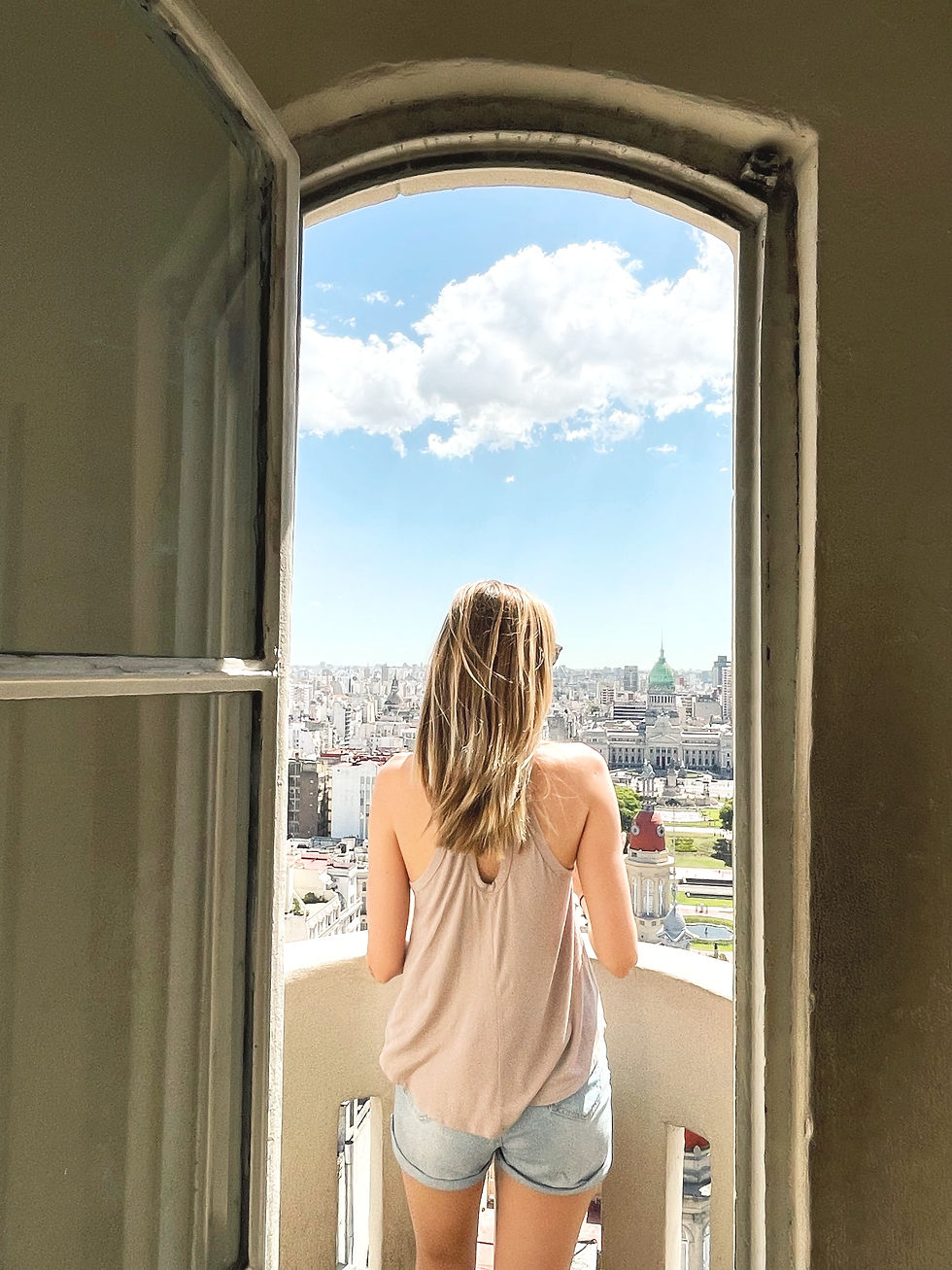
BUENOS AIRES OVERVIEW
Safety ⭐⭐⭐⭐
Affordability ⭐⭐⭐⭐⭐
Public transportation ⭐⭐⭐⭐
Easy to reach ⭐⭐⭐⭐
Adventure ⭐⭐⭐
Number of days recommended: 5 - 10+
Car recommended: 🚫
Visa required for Americans: 🚫
BLOG CONTENTS OVERVIEW
Where is Buenos Aires?
Buenos Aires, the capital of Argentina, is a beautiful city on the Río de la Plata with no lack of things to see and do. With a population of over 15 million people, 33% of Argentina's entire population lives within the city's metro area, ranking it as the second largest city in South America behind Mexico City. I absolutely adore this city that felt to me like a mix between Madrid and Mexico City.

Language and Culture
Argentina is a country full of energy, culture, and passion. Throughout the country you'll find a mix of European custom due to the massive influx of Europeans (largely Italians) during the end of the 19th century, and Latin American / indigenous culture. Thanks to a lot of investment in the sports infrastructure over decades, Argentina boasts the recent World Cup champions and a population that is devoted to Messi. Upon my arrival right after their World Cup win, murals and tattoos of Messi were everywhere and the popularity of the name "Lionel" and "Lionela" for babies skyrocketed by 700%. You'll also find a strong rivalry between the local soccer teams Boca Juniors and River Plate.
Spanish is the main language spoken here, and I found that speaking Spanish was really helpful in navigating the city and getting to understand the culture. That said, a lot of people speak English and you will find English tours and menus at more highly trafficked locations. For those who speak Spanish, the Argentine dialect is a little different from the Spanish typically taught in schools. You'll notice they pronounce the "ll" and "y" as "sh" and use the "vos" form instead of "tu." According to some of my friends from Madrid, they find the Argentine accent to be the most beautiful of the Spanish accents, so keep an ear out.
As a country constantly dealing with economic and political instability, it will be interesting to see how the exchange rate continues to fluctuate and how Argentina maneuvers attracting big companies, talent, and foreign investment. As an Argentinian classmate of mine responded when asked how much he saves per month, he looked back and laughed: "Save? We don't save. We save by spending."


DEEPER DIVE
🦺 Safety Thoughts
I largely felt very safe in Buenos Aires but it is a massive city, which means that you should always be alert. I felt as safe in this city as I do in Paris and Berlin.
I didn't feel unsafe walking alone - I would walk around and explore neighborhoods on my own or walk back from classes. But I was in very well known parts of town (Recoleta, Palermo, Belgrano, Puerto Madero). There are some neighborhoods where you shouldn't do this.
IMPORTANT TIPS if you are walking down the street, especially as a woman:
Don't walk with headphones in. This might impact your awareness of your surroundings and can also make you look like an easier target
Never walk with your phone out. It's easy for it to get snatched out of your hand. This happened to a classmate who had her phone taken out of her hand by a motorcyclist who was driving by. If you need to look at maps or text, stop walking and step away from the street, or go into a nearby restaurant or store. Don't put your phone in a back pocket.
Wear your purse as a cross body and keep it in front of you. If you have a backpack it's common to wear it on your front instead of your back. You'll see some locals doing this to keep people from potentially grabbing something from the back. They also always do this on public transportation to be polite. I wore mine both in front of me and on my back depending on where in the city I was or how crowded the area was.
I would get catcalled or men would stare at me, but I never personally experienced being approached or aggressively harassed.
Below I share some consolidated Dos and Donts that might be common sense, but are always good reminders:
DO | DONT |
Bring a purse with a zipper and wear it as a cross body | Put your purse on the back of your chair at a restaurant |
Stop and go into a nearby store or restaurant, or towards a less-trafficked part of the sidewalk to look at maps or text | Pull out your phone on the street or walk with in out in your hands |
Be aware of your surroundings | Walk with headphones in |
Have small amounts of cash with you | Have all of your cash on you at once |
Be discreet when pulling out cash to pay for something | Pull out wads of cash and count through it at the register. Don't indicate you might have more cash on you |
Wear your backpack on your front when walking around crowded areas, or when on public transportation | Wear your backpack normally and bump into people on public transportation or risk someone trying to unzip your backpack from behind |
💵 Affordability Thoughts
SUPER SUPER affordable!! The exchange rate is really in your favor if you are using USD.
I go into much more detail about the Argentinian economy and how to exchange money below.
$100 in general is plenty to live on for an entire week, but you can easily spend more (🙋🏻♀️) if you go to top restaurants and do some shopping.
An average meal here costs around $6 - $10. Coffee $2. But these prices have likely changed with inflation and decreased (the dollar is stronger than the peso so you can get more with it).
You can find deluxe luxury AirBNBs/hotels as well as cheap hostels. What you spend on lodging is up to you. Even a higher end accommodation may still be relatively affordable.
🚌 Public Transportation Thoughts
Is great, cheap, and pretty easy to navigate.
METRO: There's an extensive metro system that will take you almost anywhere in the city you want. I felt safe taking the metro alone.
BUS: There is also a great bus system in place, which is a little trickier to figure out but extremely efficient once you have. I think riding the bus is a must-do cultural experience. It's also the cheapest ride you'll find at 25 cents. I felt safe taking the bus alone.
SUBE CARD: You have to fill up your SUBE card before you can ride the bus or metro, which can only be done at certain stops or in certain metro stations. NOTE: Some classmates found it tricky getting a SUBE card itself. You should be able to get them from particular metro stations, at a tourist assistance center, or at a kiosko (shops you'll see on street corners that are selling sweets and cigarettes)
If you speak Spanish you can navigate this site to find information on: buying your SUBE card online, the SUBE app, and locations in the city where you can buy and recharge your SUBE card.
RIDE SHARING (like Uber): Uber has been a bit of a hot topic. They do operate in Buenos Aires, but it's surprisingly hard to find consensus about whether it's legal or not. While I used it once or twice, the go-to app is called Cabify and it's the same as Uber. You can pay for your ride in cash, or credit through the app. A ride across the city would cost about $8-$10.
TAXIS: I would recommend against taxis, especially in touristy areas of the city like Puerto Madero. The odds are pretty high that you’ll get scammed. 2 common scams:
You give taxi drivers cash and they have two wallets up front – one with real bills and one with counterfeit bills – and they will give you back counterfeit bills.
They will run the meter and tell you a really high price for your ride. Or drive you in a very indirect route to increase the price.
TIP: If you have to take a taxi:
Have small bills so that you can have as close to exact change as possible
Track the route on google maps to make sure your driver isn’t taking you an odd route to your destination.
🧗♀️ Adventure Thoughts
I think exploring new cities is always an adventure, and Buenos Aires is no exception. But in comparison to Patagonia and other trekking/off-grid locations I consider the adventure rating low. Buenos Aires is a big city with tons of amenities, wonderful places to stay, and great places to eat and shop.
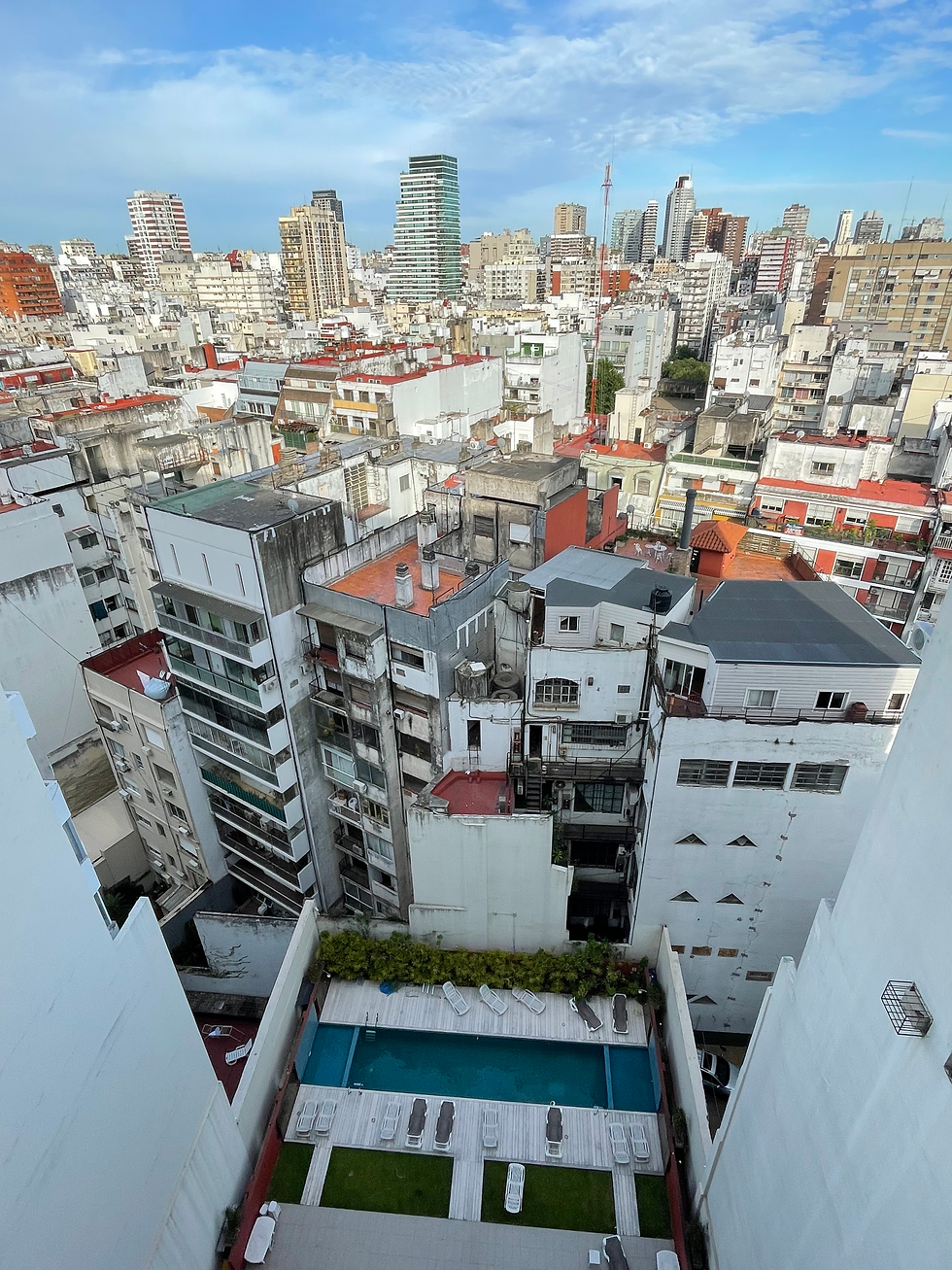
VISA REQUIREMENTS
If you are an American you do NOT need a visa to enter Argentina. For foreign nationals exempt from the visa requirements, all you will need is a valid passport with a blank page for the entry stamp. You can stay in the country for 90 days. If you are not sure if you are exempt from the visa requirements, check here.
LOGISTICS
Getting to Buenos Aires
Fly to EZE airport – the city’s international airport. There is a second airport - the Jorge Newberry airport (AEP) that flies nationally and to a couple of border locations, but will very likely not be where you fly into.
Getting from EZE airport into the city
There are 3 main ways to get into the city:
CABIFY Essentially Argentina's Uber. TIP: Download the app beforehand and put in your payment information so that when you land it’s easy to call your ride.
TAXI I didn’t know what I was doing so I decided to just take a taxi into town. I know that above I said to *never* take a taxi, but they have a regulated flat price from the airport and that felt like the easiest option at the time. Finding the taxi stand is easy – it’s a huge desk right in the middle of the arrivals area once you exit baggage claim. (It’s right next to the Starbucks, if that helps you orient). When I landed it was surprisingly crowded and I did have to wait about 40 minutes for the taxi. You’ll get in line, pay up front, and get a ticket with a number on it. Then your taxi driver will come in and find you once he’s there. TIP: If you decide to go this route get in line as soon as possible because there is usually a little wait. Cost: for me it was 8,000 pesos. Depending on the exchange rate the price could be anywhere from $25 to $50. Time: 40 minutes assuming no traffic. NOTE: Do NOT take a taxi from anyone soliciting in the airport entrance.
BUS There is an option to take the bus into the city but I definitely don’t think it’s worth it. It might save you some money, but it’s a way bigger hassle and takes a lot more time. It will also take you to the Plaza de Mayo so you’d likely have to transfer to a different bus or metro or take a cabify/taxi from there. Price: less than $1 Time: 1.5 – 2 hours traffic depending Bus line: 8 NOTE: you cannot pay for your bus ticket in cash. You’d need a SUBE card (see above), which is one additional hassle. If you are dead set on taking the bus, you can find some more information here.
Should I rent a car? I would say no. The public transportation is really good and really cheap. If you don't want to do that, cabify is also really cheap and you won't have to deal with parking. And there are a lot of parts of the city that are walkable. A car a hassle and expensive.
CASH vs. CREDIT
This entire topic is so complex in Argentina because of their crazy inflation and ever changing exchange rates that I wrote an entire other post on it. Read it here.
Tl;dr: CASH IS KING. Bring USD. Operate as though credit card is the backup method of payment.
NEIGHBORHOODS OF BUENOS AIRES

Must-See Neighborhoods / Where I Stayed Palermo Soho. My favorite neighborhood in the city. This is where I lived during my time in Buenos Aires. This is where all of the fabulous shopping and cute boutiques can be found. There are cute cafes and great restaurants on every corner and it’s extremely lively and fun. I felt very safe in this neighborhood and with its big tree lined streets it felt very European.

Recoleta. I stayed here for a week during my time in Buenos Aires. It has an entirely different vibe from Palermo Soho. Palermo Soho is lively and fun, but feels more like a neighborhood. Recoleta feels much more like you are living downtown in the hustle and bustle. The buildings are taller, the streets are noisier. While the city is huge, Recoleta feels much more like a heart of the city with its proximity to landmarks like the museum of national art, the recoleta cementary (where Eva Perón is buried) and other destinations.
Other neighborhoods you might hear about / want to explore
Belgrano. More to the north of the city is Belgrano. It’s a wealthier neighborhood and a great place to just go and walk around. There are beautiful parks and also high end shopping.
La Boca. This is where the soccer stadium and the famous El Caminito are located. Do NOT visit this neighborhood unless you are with a tour or going to one of a few well known areas within a few block radius -- it is one of the more dangerous neighborhoods in the city and is not one where you should just wander. But if you have time it is worth visiting and seeing all of the colorful homes.


Puerto Madero. I didn’t spend much time in this part of the city but it is the more luxurious neighborhood in the eastern part of the city. Because of the high end restaurants and fancy hotels, prices will be higher than other parts of the city. In this neighborhood the biggest thing to do that isn’t eating/drinking related is the ecological reserve that is popular for walking, biking, and nature watching.
Palermo Hollywood. West of Palermo Soho (yes, both are named after NY and LA) lies Palermo Hollywood. When I was there it was a ‘rising’ neighborhood gaining more popularity as a destination spot. It’s known for it’s food and drink scene, so my decision to walk around and explore during the afternoon one day didn’t net me much. Most places were still closed and the streets were pretty quiet. I wish I had gone back to explore in the evening/night to see if it was more lively.
ACTIVITIES
Worth it / Must - Do :
Teatro Colón Absolutely stunning opera house in Buenos Aires. Considered one of the top 10 opera houses in the world, Teatro Colón is reminiscent of other world class operas like La Scala in Mila, The Paris Opera, and the Metropolitan Opera in NYC. I loved the tour and highly recommend doing this, especially if you are into the arts. We were visitng during a time when no operas were showing, otherwise I would have loved to have seen an opera here. Ticket price: 10,000 pesos English tour hours: 11 am, 12 pm and 3 pm Tour duration: 50 minutes More info and buy tickets: here

Ateneo Grand Splendid Something that may not always be featured as a 10 top thing to do in Buenos Aires is this hidden gem. A stunning theater converted into a massive book store, the Ateneo Grand Splendid is definitely worth a visit if you are walking around the Recoleta neighborhood. The theater dates back to 1919 and features floors of books and cute café. It was even declared the world's most beautiful book store by National Geographic in 2019. I loved wandering in and going through the different levels and genres of books. Entrance: free Hours: Monday – Saturday 9 am – 9 pm. Sunday 12 pm – 9 pm.

Buenos Aires Ecopark Nestled in the neighborhood of Palermo is the Buenos Aires Ecopark. It’s another thing that may not be ranked as a top 10 must -see, but was one of my favorite places to wander when I was there. It’s an interactive eco-park that features animals native to the area such as the Patagonian Mara (photo below), which roams freely. It was historically a zoo dating back to the 1880s, but in 2016 the government closed the zoo, released many animals back into the wild, and reopened it as the eco-park whose aim is to educate the public on environmental issues and local wildlife. Be careful about when you go, though, the hours are more limited than most other attractions. Entrance: free Hours: Tuesday – Sunday 10 am – 5 pm.

Mercado San Telmo - especially on the weekends Another must-visit! This is an incredible market that offers just about everything you could imagine from food and coffee to antiques, crafts, and fruit/vegetable etc stands. I loved wandering around and exploring the different stalls and stopping to enjoy a delicious coffee. While the market is open every day, there are some stands that only open on the weekend. If you can, I recommend going on a Saturday or, even better, on Sunday to experience it in its entirety. It’s located on the south eastern part of the city, a bit of a trek if you are staying in Recoleta or Palermo. But it’s pretty easily accessible via the subway. Entrance: free Hours: Monday – Friday 10 am – 9 pm Saturday 10 am – 10 pm Sunday 10 am – 8 pm Getting there: take the subway Line D to Catedral Station (this would be what I recommend) or Line A to the Plaza del Mayo station where the outdoor portion of the street fair starts.

Recoleta Cemetery A truly impressive and important cemetery is the Recoleta Cemetery. It’s considered one of the most important and beautiful cemeteries in the world and is definitely worth a visit. I highly recommend taking a walking tour. Not only will you learn more about its significance and famous inhabitants (like Evita Perón), but you will feel less overwhelmed navigating its enormous 14 acres and 4500+ graves. Price: Without a tour it's 1400 pesos Hours: every day 8 am – 6 pm.
Palacio Barolo I loved this tour and visit. I found the palacio architecture to be fascinating. It was built with 3 distinct levels representing heaven, hell and purgatory in reference to Dante's Divine Comedy. You have to take a tour to see the different levels, but the end of the tour takes you to the rooftop which has unbelievable views of the city. For those brave enough, you can climb up to the little room with an old searchlight. Length: 90 minutes Hours: Monday, Wednesday, Thursday, Friday, Saturday: 10, 12, 2, 3, 4, 5, 6 pm. Tickets: 12,600 pesos. 9,300 pesos for students. Buy here.

Cool if you have time, but maybe not prioritize.
El Caminito
This is a really fun and colorful 'street museum' to see and is near La Bombonera, home to the Boca Juniors soccer team. Famously known for its colors and lively streets, El Caminito is a fun place to see if you have time. That said, it is relatively far from the main neighborhoods of Buenos Aires and is also in a pretty dangerous neighborhood (La Boca) if you stray from one of the few main streets. I visited on a tour and would recommend you do too if you are going to go. I err on the side of extra caution.
Museo Evita
If you have some time to kill one day I think that this is an interesting museum to see. It provides a pretty in-depth overview of Argentinian (icon) Evita, going through the various stages of her life and political and social impact on Argentina. I found that there was one particularly interesting thing about the layout of the museum – I don’t want to spoil it, but keep a look out. I went through it in about an hour.
Time: Closed Monday
Tuesday – Sunday 11 am – 7 pm.
Ticket price: I don’t remember specifically but not much
MALBA (Museo de arte latinoamericano Buenos aires)
This museum is dedicated to preserving, showcasing, and creating awareness around Latin American art from the early 1900s until now. Since I was less familiar with artists, motifs, and movements in Latin America I found this museum particularly interesting and informative. I went through it in about an hour.
Hours: Closed on Tuesdays. Open every other day from 12 pm – I pm
Ticket price: 2,000 pesos general. 1,000 pesos for students
Museo Nacional de Bellas Artes
This museum is what you’d think of when you think of a national art gallery. It is home to art from around the world (Degas, de Goya, Renoir, etc) as well as a pavilion for national artists. If you love art and have a few hours I think this museum is worth a visit. It’s also in a stunning building.
Hours: closed Mondays. Tues – Friday 11 am – 8 pm. Weekends 10 am – 8 pm.
Ticket price: free
Graffiti tour of Palermo Our school organized a tour of the grafitti and street art in Palermo and it was wonderful. It covered a lot of different kinds of street art, various prominent artists, and the movements associated with them. It was a really cool way to get more cultural context and I highly recommend it if you have time. Here's an example tour. NOTE: this is not the tour we did, but it has gotten good reviews.

Tango I’m sure that when many of you think of Argentina, you think of tango. A passionate dance, it sadly has become more of a relic of past Argentine culture being performed mostly now for tourists. We went to a big production tango show, Tango Porteño, that was definitely fun to experience. I’m glad that I went, but for me it felt like too much of a production, almost a caricature, of traditional tango. I think there are smaller venues around that do tango and dinner, which I would recommend considering if you want a more intimate experience.

High tea Teatime is a surprisingly popular cultural activity in Buenos Aires used to help offset the late dinner hour. We wanted to experience it for ourselves and booked high tea and L’Orangie Alvear Palace Hotel. Since we were living in the city it was a really fun afternoon activity. They are very accommodating to dietary restrictions with gluten free, pescatarian, and vegetarian options. If you don’t have much time in the city I wouldn’t prioritize this, unless you just really love high tea. Come hungry – you get so much food! Price: 10,600 pesos Timing: can schedule online but may need to call to arrange

BA sign and obelisk If you’re close to these then I would go walk by, but I personally found them underwhelming, iconic as they are. I wouldn’t plan my day around them, but view them as a little bonus if you happen to be in the area. I also don’t think they photograph super well, if you’re going largely for the photo op.

Plaza de Mayo
Historically the Plaza de Mayo has been the location of some of the country's most significant events. You can still witness the Madres de la Plaza de Mayo with their white head scarves march around the square on Thursdays at 3:30. This group of women formed during Argentina's Dirty War in response to the disappearances and abductions of citizens. I thought the Plaza de Mayo was beautiful and found the historical significance impactful, but if you are really tight on time then I think you could also skip this. That said, it is close to San Telmo market. If you happen to be going there you could tack this on.
Bridge in Puerto Madero I believe it might have some architectural significance but for me it was just a bridge :D. I was in the area already so I saw it but I wouldn’t seek it out.
ACTIVITIES BY NEIGHBORHOOD


EAT LIKE AN ARGENTINIAN
Normal dinner hour is 9 pm – going before that is quite early. If you’re looking for dinner reservations you’re most likely to find them last minute before 8 pm (like the 5 pm reservation here. the staff will look at you like you’re crazy) or at 11 pm after the main dinner rush (like the 9 pm reservation here in the US).
Mate
You will see this drink everywhere with locals drinking it at all hours of the day. Everyone has their own mate thermos filled with hot water so that they can mix up a fresh mate whenever they please (see below picture - mate while hiking!). You’ll recognize people drinking mate because they will have special cups with a very particularly flat-shaped straw designed to filter the leaves that are put directly into the water. What you also might notice is that it’s really hard to find mate on a restaurant or café menu – I never did, which really surprised me. If you want to try you might have to befriend a local and ask for a sip!

Asados
And meat! An asado is basically a BBQ with all of Argentina’s finest steaks. It’s a huge part of the Argentine culture. If you meet any locals see if you can join for an asado, or you can go to Belisario Roldán that has wonderful meat and a fun atmosphere. For those who eat meat, there’s no better place than Argentina. The steak is unbelievable.
Some notes on meat: If you eat meat, eat steak. Order it “al punto” (which means medium, but is the way that they recommend). My favorite cuts of meat were: entraña (skirt steak) and vacio/cacio (flank). Asada de tira was a friend’s favorite, if you like a fattier steak.

Dulce de leche
Is to Argentina what peanut butter is to the US. One of the main elements of the beloved Alfajores and an option for spread on toasts, medialunas, and other foods.
Alfajores
Are a very famous and popular cooke. Like a shortbread biscuit sandwich with dulce de leche in the middle. There are always debates about where to find the best alfajores in the city. Havanna is one chain that offers more varieties than you could imagine.
Milanesa
Is like an Argentine schnitzel: thinly pounded and breaded meat. But similar to a pizza you can put different toppings on it depending on where you are. For example, Casa de la Milanesa offers “taco milanesa” with guacamole and cheese on top.

Medialunas
Argentinas croissant. If you see a croissant-like pastry in a café, it’s likely a medialuna. Beware that they are sweeter and denser than croissants. They are commonly eaten as breakfast with a cup of coffee, either plain or with some dulce de leche spread.
Empanadas
Are delicious and very common snacks and quick to-go bites. They’re a little bit like a calzone, consisting of dough filled with different fillings both sweet and savory.
NIGHTLIFE
Buenos Aires is a city that comes alive after 11 pm. Like I mention above, normal dinner hour is 9 pm. If you want to go out and experience the club scene, most places don’t get going until 2 am and you can party all through the night. Buenos Aires isn’t lacking for clubs. I personally didn’t go to many in BA since I prefer a more relaxed late-night-bar-setting. But I absolutely recommend going out at least one night if you’re in town long enough! It is such a central part of the culture.
I noticed that I just wasn’t sleeping that much while in BA. I was up early for 9 am class and would be eating dinner at 11. I wasn’t sure if that was just the product of being a study abroad student, or if locals also operate on such little sleep. They do! My Argentinian class mates told me that they keep similar hours, with work hours being pretty normal starting at 9 and that they just don’t sleep that much. No wonder mate is everywhere!
PLACES TO GO / EAT / DRINK (LARGELY IN PALERMO SOHO)
Bars:
Backbar room
Nicky Harrison -- they have a speakeasy in the back but to enter you need to eat there first and then ask or be invited back.
Cochinchina Bar --- just rated # 26 on the list of world's best 50 bars!
Tres Monos Bar – very popular bar, a little divey/grungey. No reservations so go put in your name and expect a wait. It was just voted #11 of the world's best 50 bars!

Victoria Brown Bar
Cafés:
LAB coffee shop
Scarlett Boutique Soho café
Surry hills coffee shop
Pottery coffee and deli
Paul French gallery – is a super cute gallery area with boutiques and a coffee shop

Restaurants:
Nicky Harrison – great sushi and a speakeasy in the back you can visit after a meal
Gontran Cherrier – French bakery that got the best ratings from French friends
La Boquería Grill – great for a steak meal
Carneros Bar and Fuegos – also great for a steak meal. ~1000-3000 per plate
Don Julio – voted the second best restaurant in South America in 2022, scoring a reservation at Don Julio can be really challenging and require months of advance planning. TIP: If you really want to eat here and haven't snagged a reservation, you can go stand in line the day of and try to get a spot. Make sure to get there before they open because once they do they will start taking day-of reservations for lunch and dinner until they are out of space. You may be eating at a weird hour, but it worked for us! It was delicious, but I also thought a lot of other places we went were also very good. What took Don Julio up a level was the experience.

ROUGH BUDGET FOR A 5 DAY TRIP
Meals (includes coffee and a drink) | 60,000 pesos (~ $160) |
Shopping | 50,000 pesos + (~ $150) |
Hotel* | $200 |
Activity fees | 36,000 pesos (~ $100) |
TOTAL | $620 |
* Overall costs were split 6 ways. This is the cost per individual.
NOTE: This budget assumes the following:
An exchange rate of 370 pesos/USD. This was the rate in Jan 2023 and has definitely changed.
5 full days in Buenos Aires
Eating out every meal at average priced restaurants, + 1 coffee and cocktail per day
Going to every activity that I have listed that includes an entrance fee
A decent amount of shopping (the shopping is so good!!)
Accommodations on the upper side of luxury. You can certainly find cheaper.
The budget does not include flights. The estimate will also vary depending on exchange rate and on where and how often you eat out, how many tours you go on, where you stay, etc.
IF I HAD HAD MORE TIME
There are endless things to do in Buenos Aires! A few things that I particularly wish I had done:
Water museum This little museum is nestled in the Palacio de Aguas Corrientes. You can tour parts of the pumping station and the little museum. I tried to go in, but they have some funky hours and I was consistently outside of visitor hours. It's not something I would recommend if you are tight on time but if you have days and days to explore then it could be unique and interesting. Even if you don't go inside, the building itself is beautiful.

Toured the congress building The congress is open for free tours Monday - Friday. It's a great way to see the interior of the beautiful building and learn about the Argentine political system. Note that tours in English are offered only at 1 pm. More info can be found here.
Visited and biked around the Costanera Sur ecological reserve Spanning over 350 hectares this is a stunning expanse of preserved land within the city. I heard it's absolutely beautiful to bike around.
ADDITIONAL Q & A
Q: Can I drink the tap water?
A: The water in general is safe to drink. Our apartment happened to have a water filter, but I didn't worry about brushing my teeth with tap water, drinking beverages with ice in them, etc.
Q: Can I barter here?
A: This is not a barter society. Prices are as listed. However, if you pay in cash when shopping you can sometimes get 10% discounts.
Q: Are there any particular vaccinations I need?
A: This depends on what vaccinations you already have. Check here for a list of everything that is recommended by the CDC, or make an appointment with a travel health service clinic or doctor.


Comments